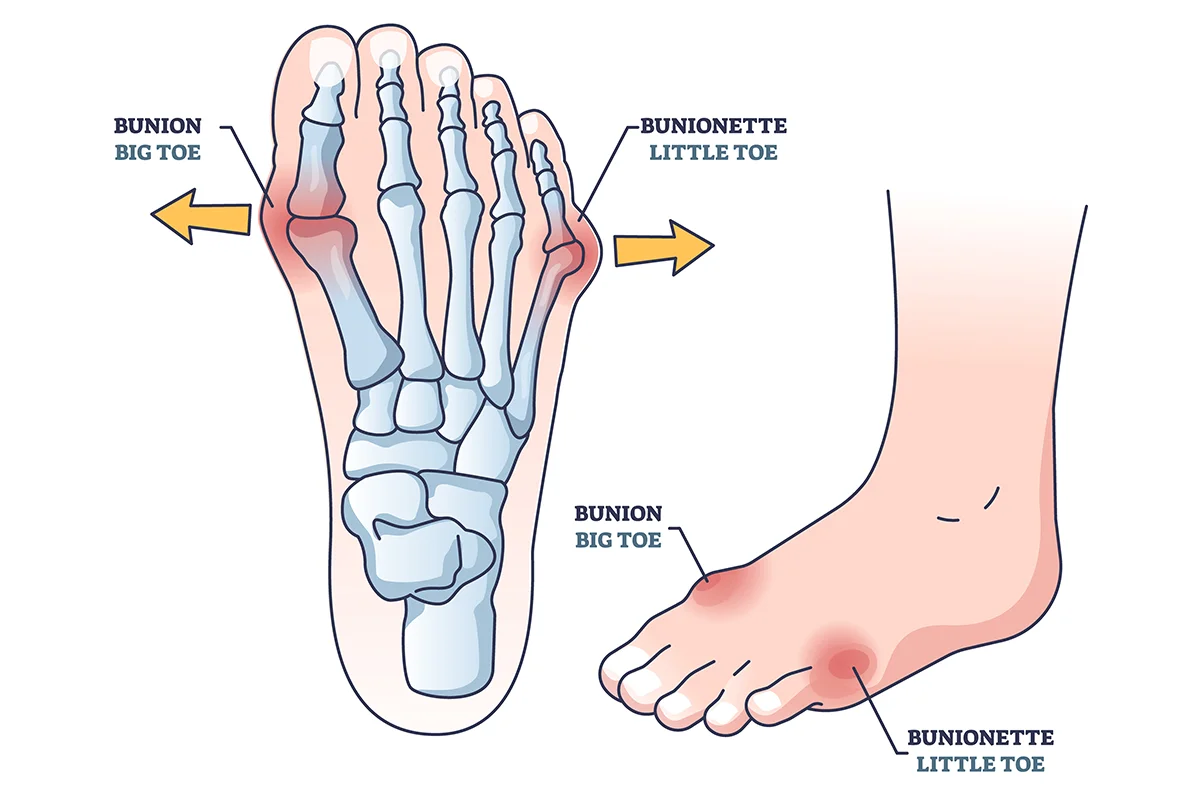
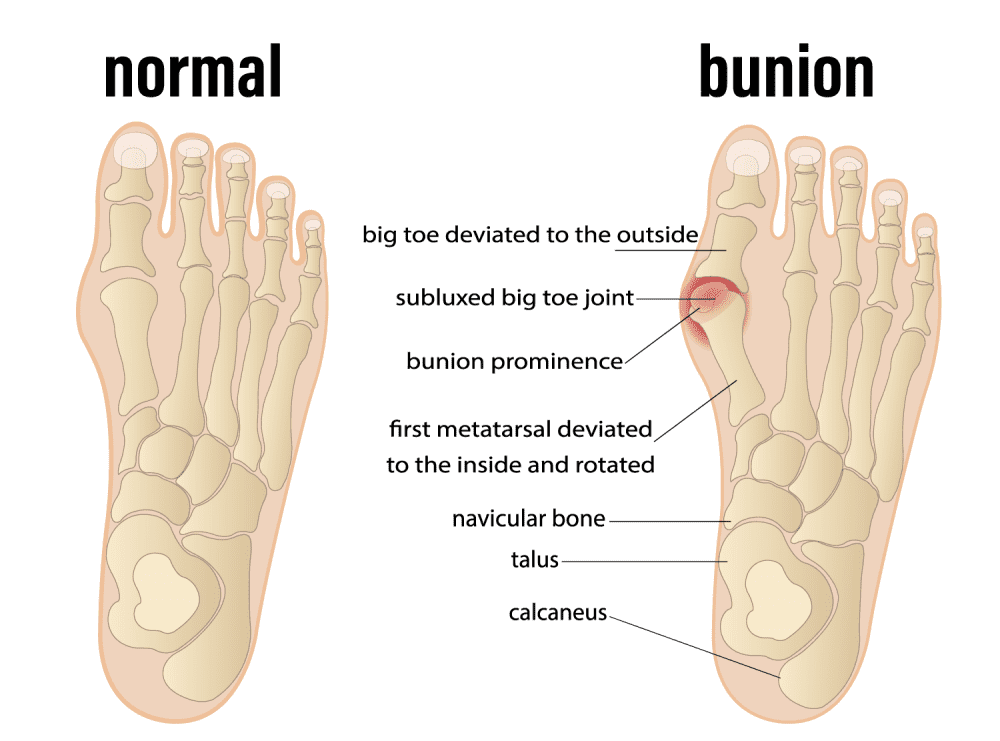
A bunion is a common condition caused by the deformation of the entire foot. It occurs when the metatarsal bone is subjected to excessive pressure, causing it to push forward and create a visible angle where it connects to the big toe.
Identifying the Signs
You can recognize a suspected bunion if two or more of the following are visible:
Big Toe Slant
The big toe is slanted toward the second toe, sometimes even overlapping it.
Bony Protrusion
A visible bump is present on the inner side of the foot at the base of the big toe.
Sharp Angle
The big toe no longer follows the straight line of the foot.
Skin Changes
Redness, swelling, or thickened skin appears over the joint at the base of the big toe.
Why Do Bunions Develop?
While many people believe bunions are purely genetic, they are often a result of how our feet develop during childhood and the shoes we wear.
Footwear Pressure
Wearing tight shoes from a young age causes muscle shrinkage and prevents the foot from functioning properly.
Muscle Weakness
The muscle that connects the metatarsal bone to the big toe (the abductor hallucis) can weaken and stretch over time.
Childhood Development
Before the age of 14, bones are not yet fully connected. Wrong shoes during this period can easily guide bones into a deformed position.
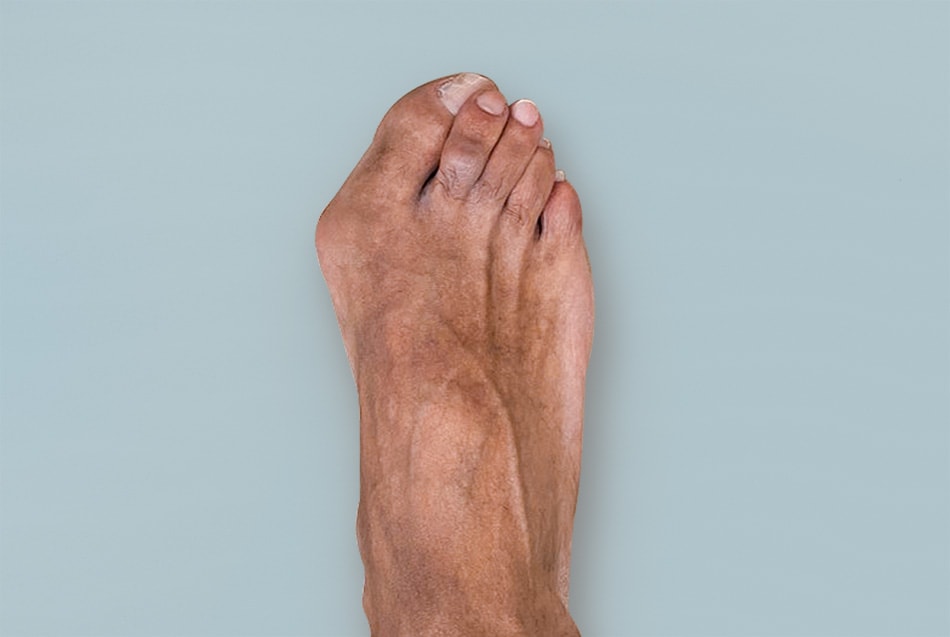
Clinical Gallery
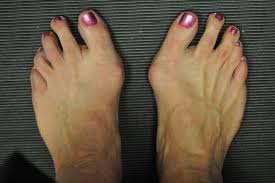
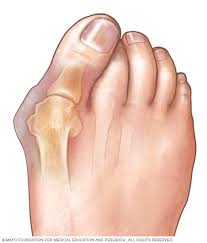
Various presentations of bunion progression and the impact on toe alignment.
Actions & Recommendations
Fixing a bunion naturally is very difficult. Prevention and management are key to avoiding long and challenging surgical recovery.
- Switch to Barefoot Shoes: Standard shoes often have narrow front parts that worsen the situation. Barefoot shoes provide the wide toe box necessary for toes to spread naturally.
- Avoid Tight Footwear: Wearing tight shoes is strictly not allowed, as they will only accelerate the deformation.
- Daily Exercises: Consistent exercises can help support muscle strength and foot function.
- Professional Assessment: Never leave this condition untreated. Always assess feet with professional foot care specialists.
Need a Professional Assessment?
At Medved PODO, we can assist you with proper hygiene and the right home recommendations for your specific case.
Consult with Vivi on WhatsApp*Information provided on our website is not medical advice and shared for information purposes only. To get a final diagnosis, please contact a medical doctor.